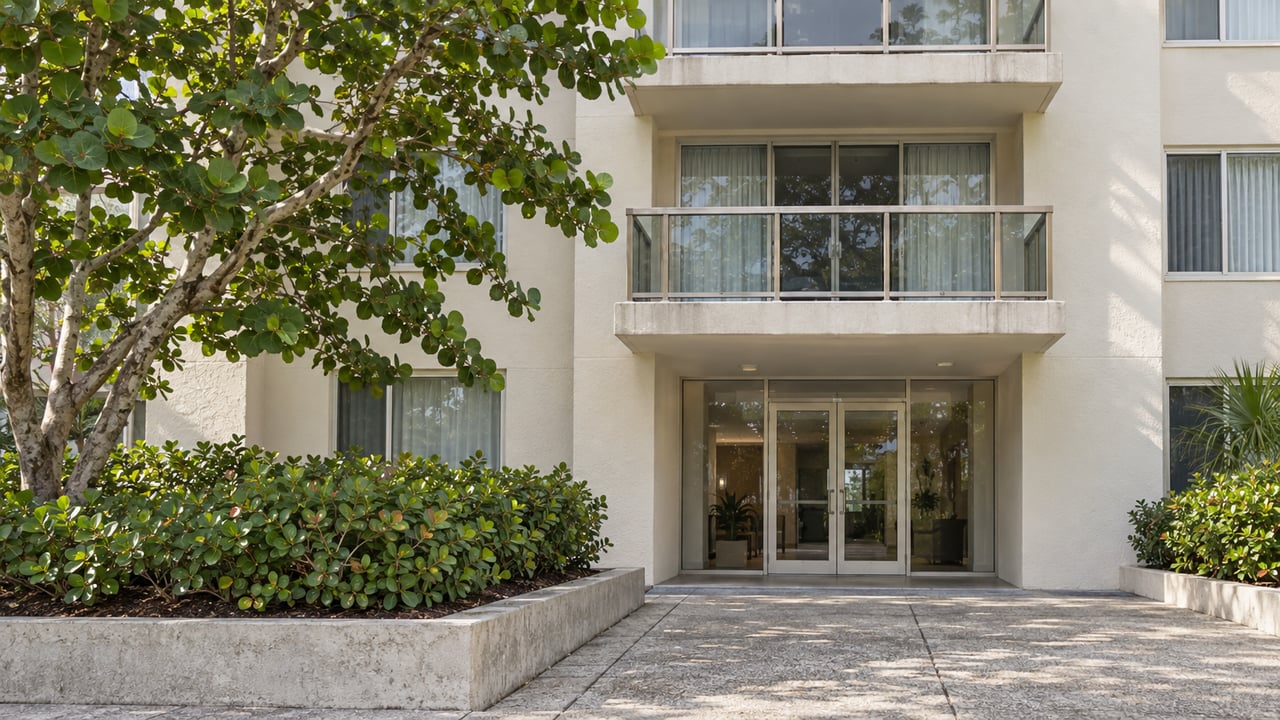
Pull up two condo listings in Tampa's Channel District right now and you'll likely see the same story every buyer expects: the older building has the lower monthly fee, the newer building has the higher one, and the math points toward the older building as the smarter buy. The Towers of Channelside, the twin 30-story towers that opened along the water in 2007 and 2008, currently sit in the $0.55 to $0.85 per square foot range for HOA dues, the lowest sustained band of any full-service tower downtown. A 1,400-square-foot unit there runs somewhere around $770 to $1,190 a month before utilities. Compare that to newer, higher-service buildings like 400 North Ashley or the Pendry Residences, where the same unit size can push past $1,750 a month, and the older building looks like the deal.
That comparison was true for the last decade. It stopped being reliable on January 1, 2026.
The Fee on the Listing Sheet Was Set Before the Rules Changed
Florida's condo safety reforms, passed after the 2021 Champlain Towers South collapse in Surfside, created two separate requirements for buildings three stories or taller: a milestone structural inspection and a Structural Integrity Reserve Study, known as a SIRS. The milestone inspection has an age trigger, due at 30 years (25 if the building sits within three miles of the coast or a local jurisdiction says otherwise), so a tower built in 2007 won't face that inspection until the mid-2030s.
The SIRS is different, and this is the part that catches buyers off guard. The reserve study requirement is triggered by building height, not age. A condo finished last year still needs a SIRS on file. As of January 1, 2026, associations can no longer vote to waive or underfund reserves for the eight structural components the law covers: roof, load-bearing walls, fire protection, plumbing, electrical, waterproofing, windows and exterior doors, and any other component with a deferred-maintenance cost over $10,000. Full funding has to begin now, regardless of when the building went up.
That means every condo tower in Tampa taller than two stories is currently in one of two positions. Either its association already completed the SIRS, priced out the eight components, and adjusted dues to reflect real funding, or it hasn't finished that work yet and the fee on today's listing sheet is a placeholder. The second group is where the surprise assessments come from, and a low fee today is not proof that a building belongs in the first group. It may simply reflect a budget adopted before the study's findings were applied.
Same Fee Band, Two Different Explanations
This is why a dues comparison between any two towers is only a starting point. The fee band cited above for the Towers of Channelside describes what owners pay today. It says nothing about how that building's reserves are funded, and the same is true of every other building in the comparison. A fee at the bottom of a local band can reflect reserves already funded to the level a study calls for. It can also reflect a budget adopted before a study's findings were applied. A listing sheet does not show which applies to a given building, so the dues figure alone can't answer that question.
The only way to tell the difference is to read the actual reserve study, not the marketing summary of it. Florida Statute 718.503 gives a prospective buyer the right to request the inspector-prepared summary of the milestone inspection, if one has been completed, and the association's most recent SIRS, or a written statement that no SIRS exists yet. Before writing an offer on a Tampa condo, that's the paperwork worth asking for:
- The milestone inspection summary, if the building has reached the age trigger
- The current Structural Integrity Reserve Study
- The association's operating budget, specifically the reserve line items
- The last twelve months of board meeting minutes, checked for any mention of a pending assessment
- The master insurance declarations page, including any recent renewal increase
Read together, these documents show how a specific building's reserve plan lines up with the dues it charges, which a fee figure by itself cannot show.
Why the Paperwork Decides Who Can Even Bid
The SIRS mandate doesn't just affect what current owners pay. It affects who can buy the unit at all. Conventional lenders rely on project eligibility rules that flag buildings with incomplete structural paperwork or unresolved reserve deficiencies as non-warrantable, meaning a standard mortgage isn't available on units inside them. When a building lands in that category, the buyer pool narrows to cash purchasers, and cash buyers negotiate harder because they're aware they're one of the few people who can close.
That's the mechanism that connects a paperwork problem to a resale problem. A unit with beautiful finishes in a building that hasn't filed its SIRS can sit on the market longer and sell for less, not because of anything wrong with the unit, but because half the ordinary buyer pool can't get financing to make an offer on it. This is a separate risk from the assessment itself. A buyer could pay the special assessment in full and still face a smaller pool of future buyers if the building's paperwork remains unresolved.
The Inventory Gap Tells the Same Story From a Different Angle
Look at how single-family and condo inventory are behaving in Tampa right now and the pattern lines up. As of early September 2026, single-family homes across Tampa Bay carry about 3.9 months of supply, a market that still favors sellers modestly. Condos and townhomes have been sitting far longer. Florida Realtors reported a median condo and townhome sale price of $255,000 across the Tampa-St. Petersburg-Clearwater market as of November 2025, down 12 percent year over year, and brokers tracking the segment through mid-2026 describe condo inventory continuing to accumulate faster than single-family listings, driven specifically by rising association fees and reserve requirements rather than by unit demand.
| Single-family homes | Condos and townhomes | |
|---|---|---|
| Months of supply (Tampa Bay, Sept 2026) | ~3.9 | Running well above single-family, per multiple 2026 brokerage reports |
| Median price trend | Roughly $420K, holding steady | $255K as of Nov 2025, down 12% YoY |
| Governing statute | Chapter 720 (most HOAs) | Chapter 718, subject to SIRS and milestone rules |
| Reserve funding rule | Not subject to SIRS mandate | Full funding required starting Jan 1, 2026 |
Single-family homes in Tampa fall under Chapter 720, which doesn't carry the SIRS or milestone inspection mandate condos face under Chapter 718. That's not a reason to avoid condos. It's a reason the two property types can't be compared on price alone right now. A single-family home's carrying costs are relatively knowable at closing. A condo's carrying costs depend on a document that may or may not have been written yet.
What This Looks Like by Neighborhood
The pattern shows up differently depending on where in Tampa you're looking. In Hyde Park, entry-level bungalows start around $700,000 to $800,000 and climb past $2 million for renovated or larger homes, almost entirely single-family stock governed by the more predictable Chapter 720 rules. Seminole Heights, priced generally in the $500,000 to $650,000 range, is dominated by 1920s-era bungalows, again mostly single-family. The condo exposure concentrates in the Channel District and downtown waterfront corridor, where new construction runs $400,000 to $700,000 and lower prices per square foot in older towers are worth checking against each building's own reserve study.
That doesn't make the Channel District a place to avoid. Buildings that have already completed their SIRS and adjusted dues accordingly are pricing in the new reality honestly, and a well-funded older tower can still be a sound purchase. The point is that the fee band alone can't tell a buyer which building they're looking at, and in 2026, that distinction matters more than it ever has before.
A Few Questions Worth Asking Directly
Does this reserve mandate apply to single-family homes or townhomes with an HOA? No. The SIRS and milestone inspection requirements apply specifically to condominium and cooperative buildings under Chapter 718 that are three or more habitable stories. Most single-family HOAs operate under Chapter 720 and aren't subject to these rules, though they can still face their own reserve pressures.
How do I find out if a specific building has completed its SIRS? Ask the listing agent to request it directly from the association, and confirm through the Florida Department of Business and Professional Regulation's condominium inspection resources, which track milestone and SIRS filing requirements statewide.
Does a low HOA fee always mean a problem is coming? Not always. A low fee can reflect a genuinely well-managed building that funded its reserves early. The fee number by itself just isn't enough evidence either way. The SIRS document is what separates the two possibilities.
This is exactly the kind of detail that gets lost between the listing photos and the closing table, and it's the difference between buying into a building's past reputation and buying into its actual financial condition. If you're weighing a Tampa condo against a single-family home, or trying to read what a specific building's numbers are really telling you, Hart Property Advisors can walk through the reserve study with you before you write the offer, not after.